
Context
Project presented in editorial form. Additional details may be added in the Markdown body.
Observation stakes
Document and analyse Palaeolithic engravings with very low relief, on supports and acquisition contexts that differ widely (museums, cave, 3D environment), with a need for scientific standardisation.
Mercurio solution
Development of a reproducible RTI pipeline (acquisition, processing, annotation) including specific hardware and an open documentation framework.
Technologies
- RTI
- RTI orthophotogrammetry
- ad-hoc RTI scanner
- motorised cart
- CIDOC-CRM semantic annotation
Delivered outcome
Structured RTI datasets, operational protocol and annotation model delivered for conservation, study and dissemination of the corpora.
The THEIA project is part of the call for projects “Digitisation of heritage and architecture”, addressing the challenges of conservation, study and dissemination of Palaeolithic heritage. Its objective was to develop an RTI production pipeline adapted to the analysis of parietal engravings with very low relief, often difficult to read, document and share among researchers.
Led with the Centre des monuments nationaux (CMN) and several institutional partners, the project focused on producing reproducible RTI datasets and on the scientific structuring of associated annotations.
RTI acquisitions on engraved fragments
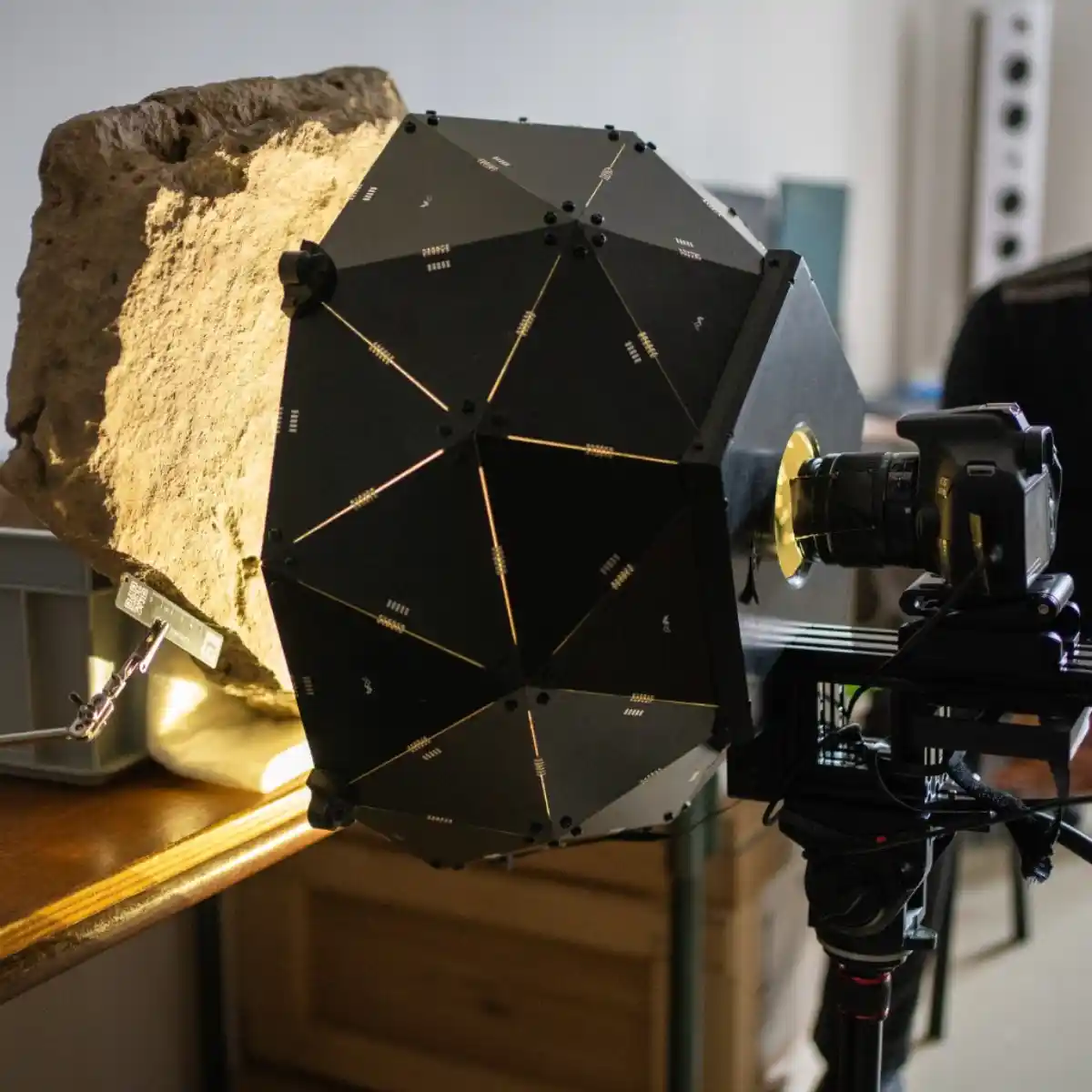
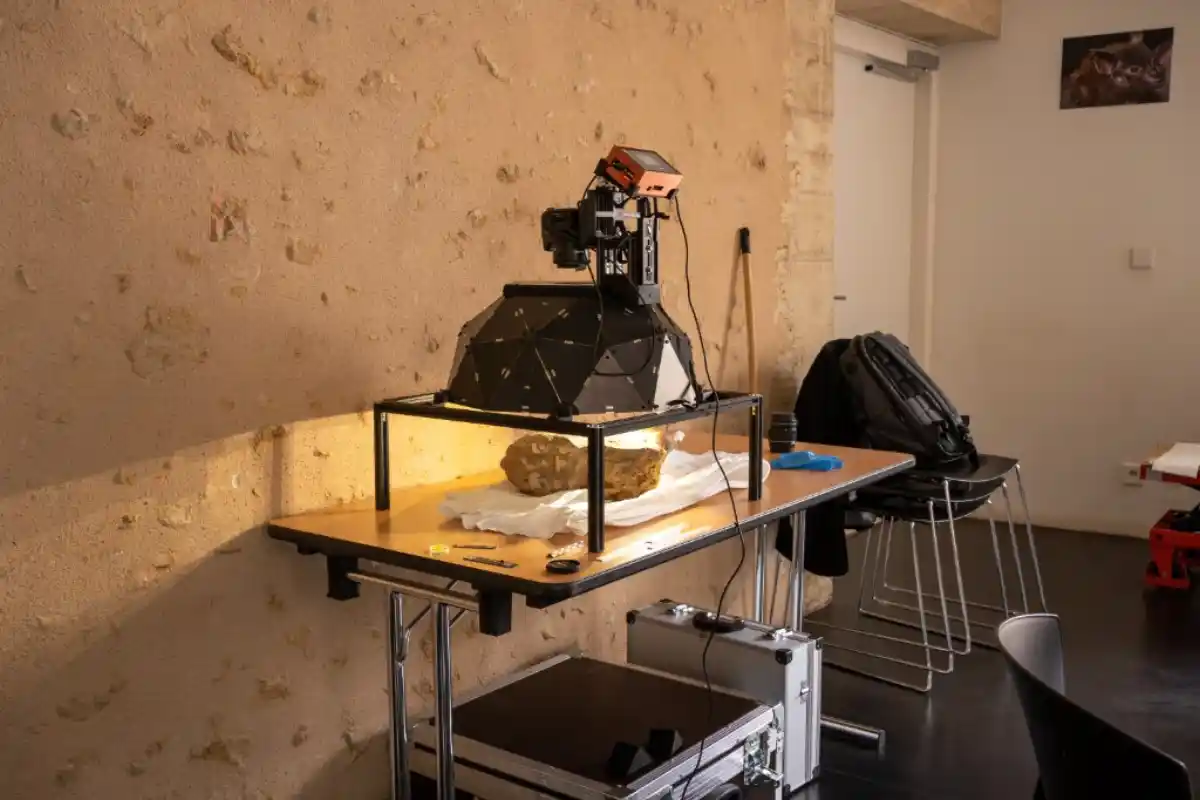
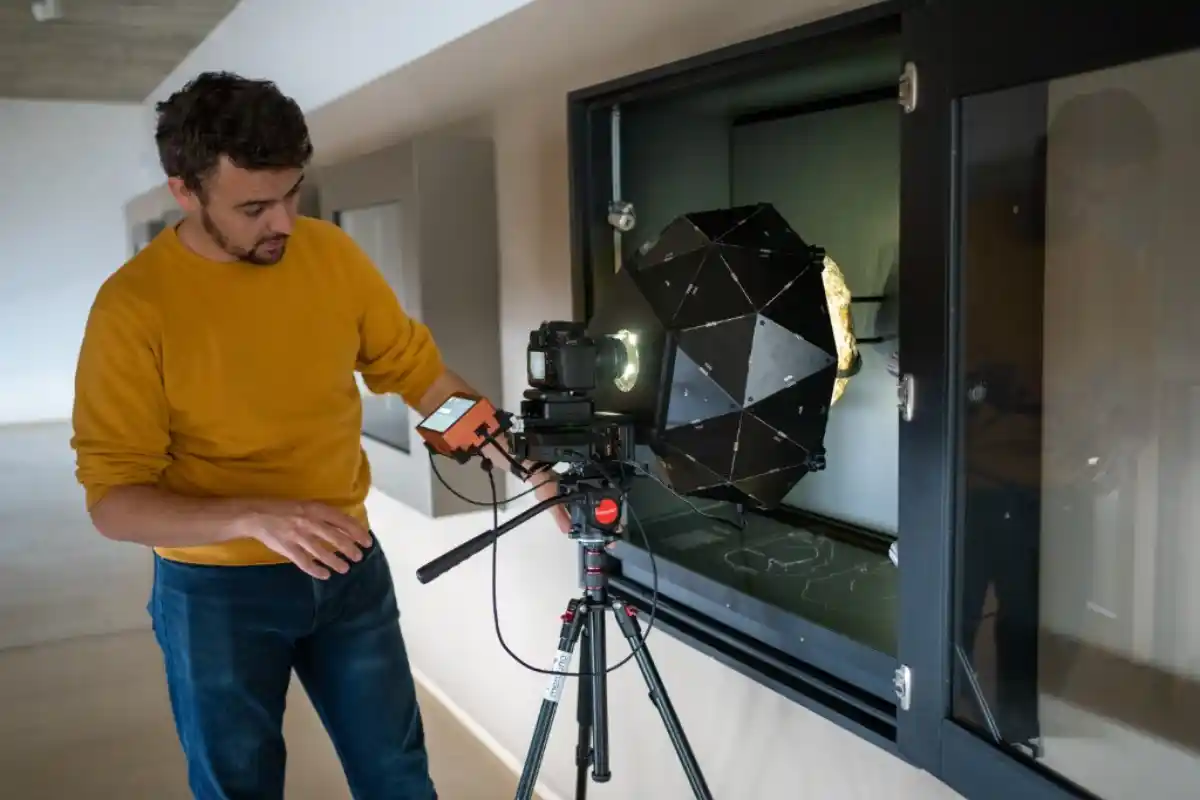
An initial part of the work involved RTI acquisition of engraved fragments held in the reserves of the Lussac-les-Châteaux museum. The aim was to produce homogeneous acquisitions on complex stone surfaces presenting micro-relief that is sometimes extremely faint.
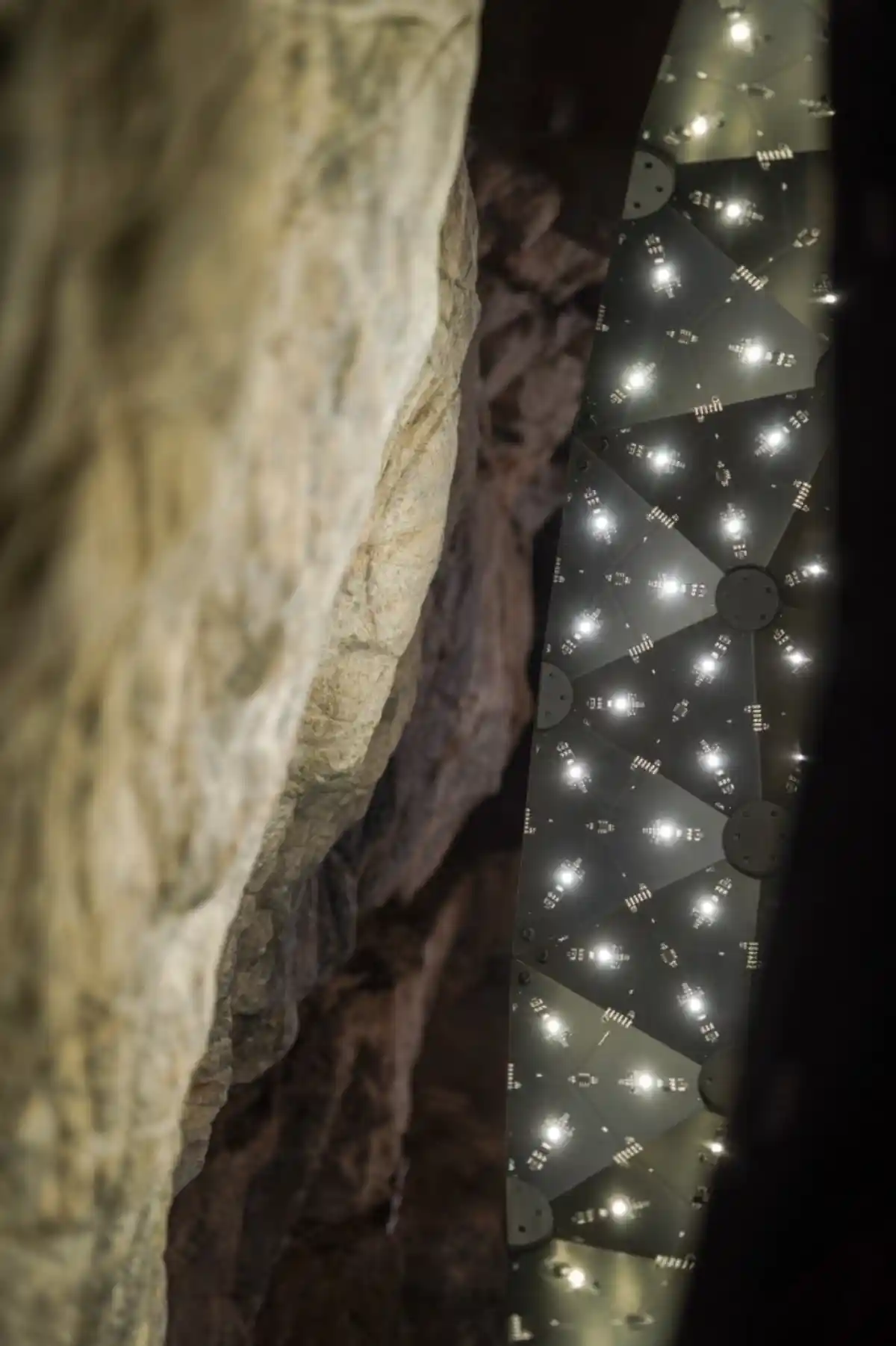
To achieve this, Mercurio Imaging developed an ad-hoc RTI scanner specifically designed for acquiring engravings on stone. The device automated image capture and ensured sufficient reproducibility for scientific and comparative use.
The acquisitions were then processed to produce interactive RTI images allowing dynamic exploration of surface variations through virtual relighting.
Acquisition of large surfaces in Chabot cave
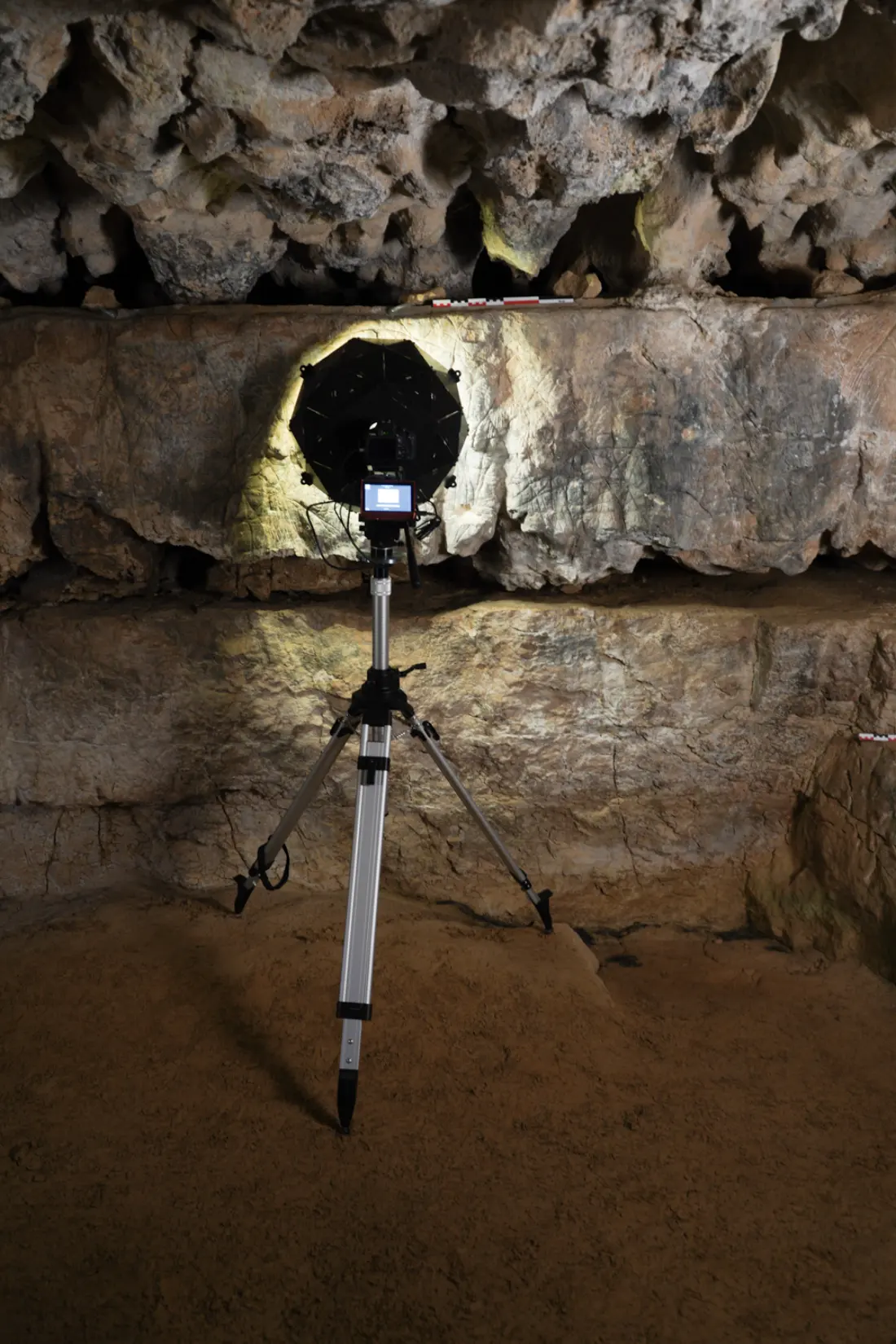
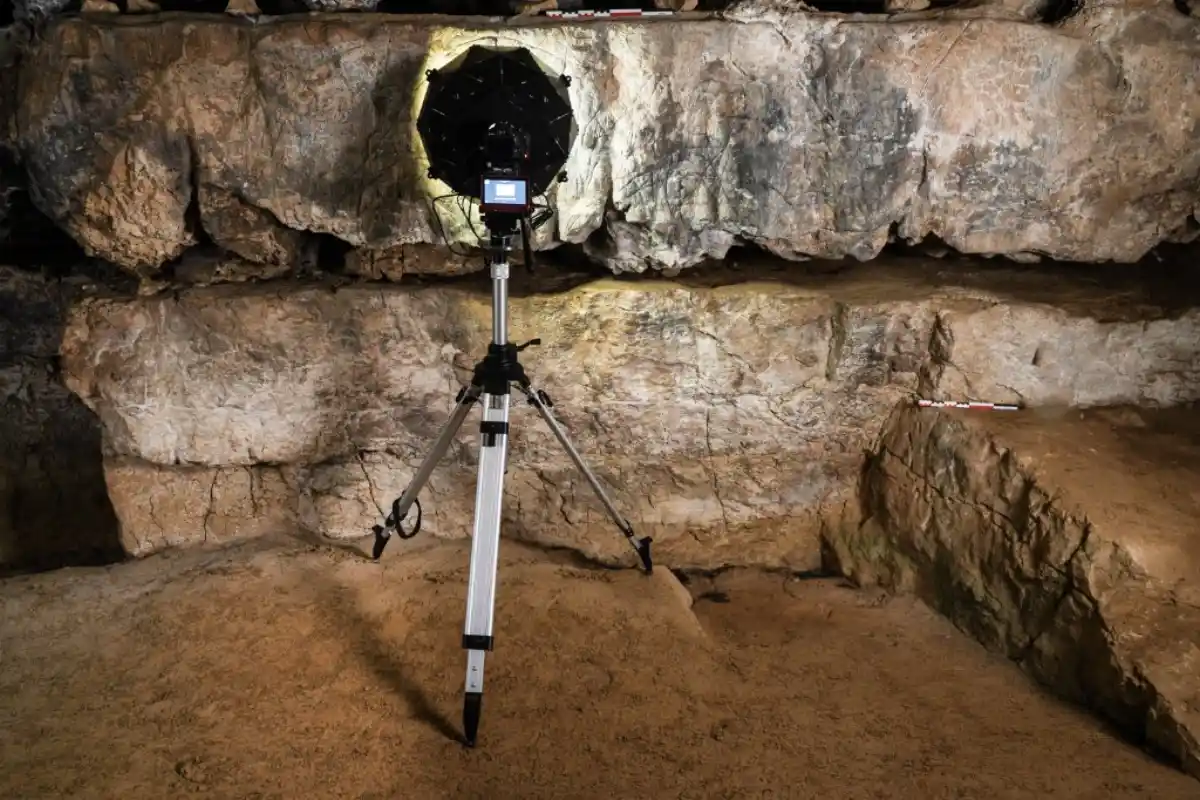
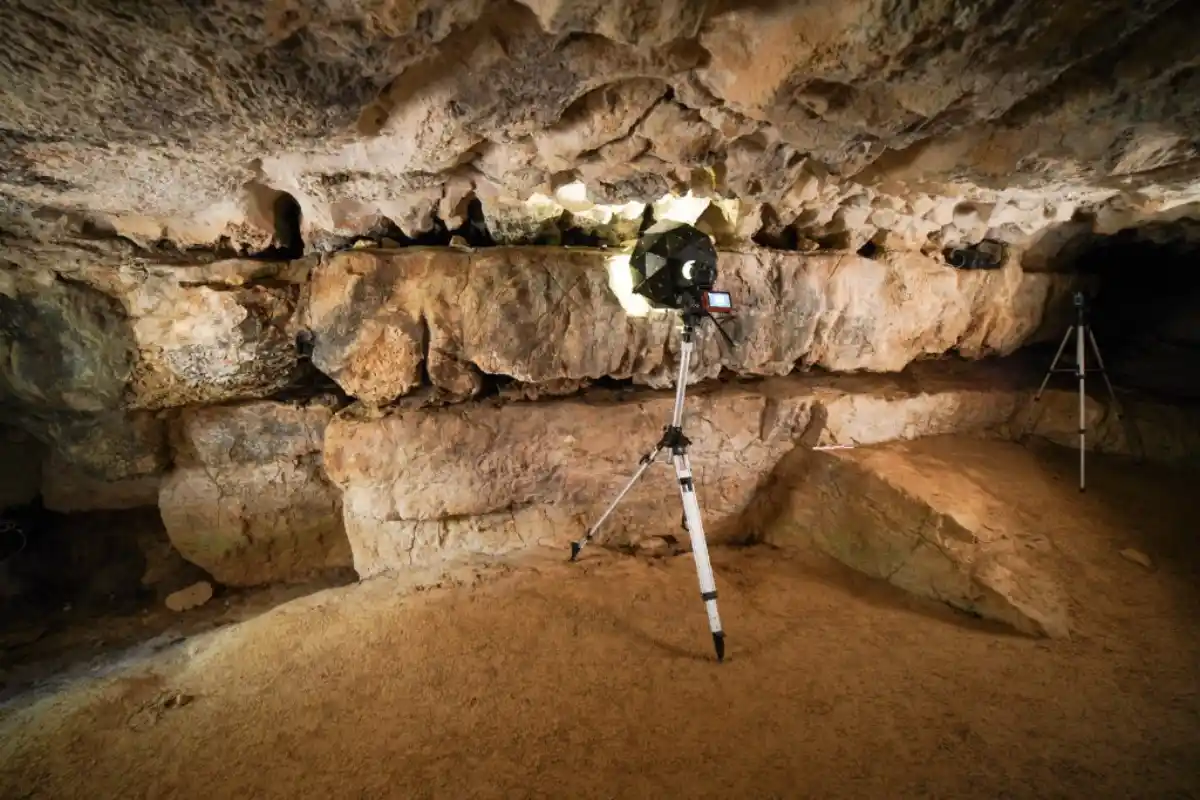
The project also involved in situ acquisition of the Mammoths panel in Chabot cave, in a much more constrained environment.
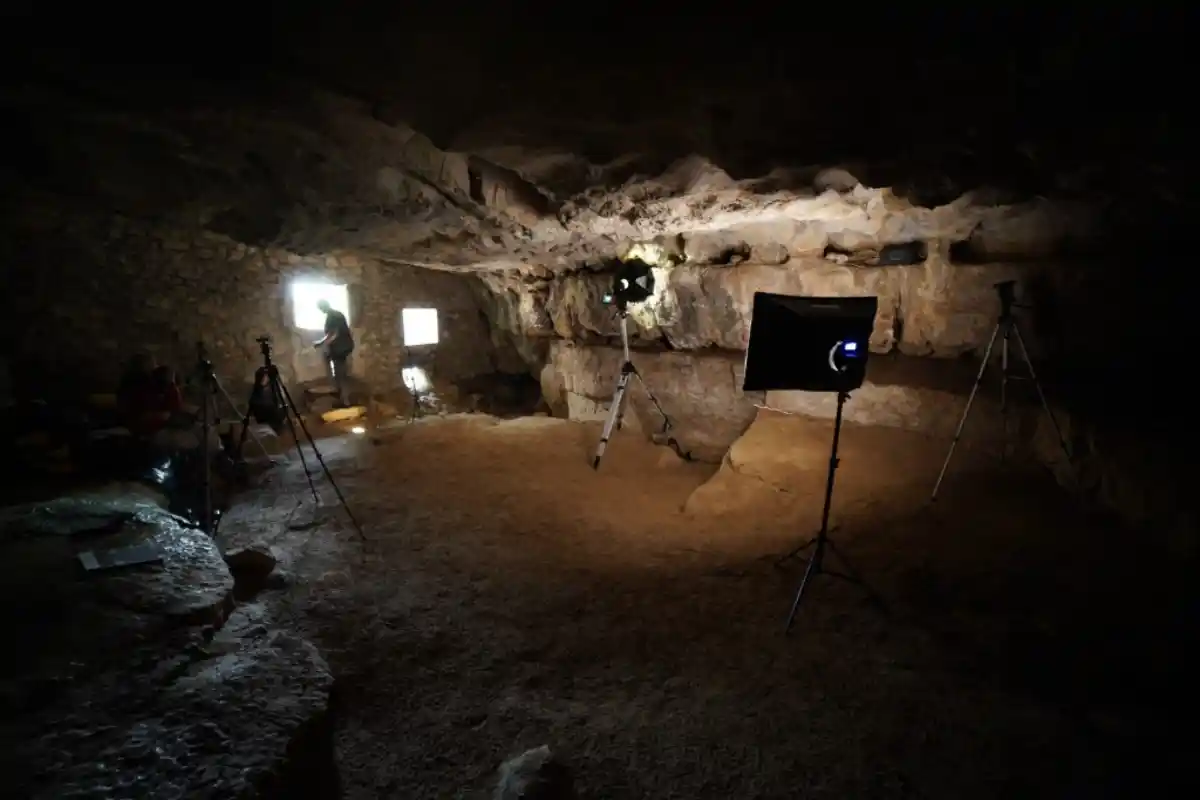
The main challenge was to adapt RTI protocols to a large wall surface, in a complex underground context, with strong constraints related to accessibility, conservation and acquisition stability.
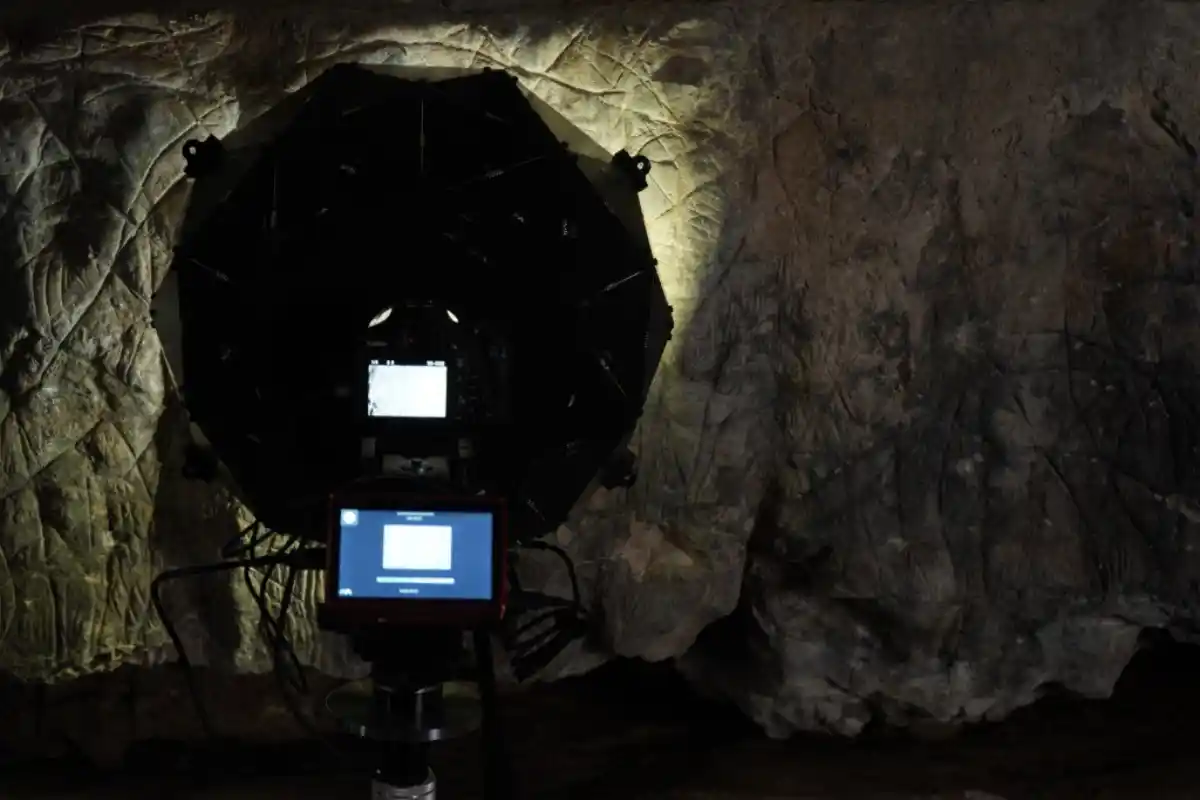
These experiments validated the possibility of producing large-surface RTI mosaics suitable for the study of parietal engravings.
Virtual RTI and exploitation of 3D scenes
The THEIA project also explored a complementary approach: virtual RTI. From existing 3D models produced by high-definition digitisation campaigns, we developed a protocol to generate virtual RTI acquisitions directly within a digital scene.
This approach opens important perspectives for studying sites that are difficult to access, fragile or closed to the public. It also makes it possible to re-use existing 3D corpora with a surface- and micro-relief-oriented analysis logic.
Scientific structuring of annotations
Beyond RTI data production, the project addressed the structuring of scientific annotations associated with the surveys.
The work carried out within the second work package aimed to define:
- a controlled survey vocabulary;
- a shared minimal graphic convention;
- an open vector annotation format;
- a structure compatible with the CIDOC-CRM model.
The objective was to link survey geometry, semantic description and metadata preservation in a FAIR and interoperable logic.
A reproducible RTI pipeline for heritage
The packages devoted to acquisition and documentation structuring were delivered and now form the operational foundation of the THEIA project.
The work carried out validated several key points:
- reproducibility of RTI acquisitions on varied supports;
- exploitation of RTI on large parietal surfaces;
- use of virtual RTI in 3D scenes;
- structuring of open and durable scientific annotations.
Beyond the Palaeolithic context, the methods developed in THEIA open perspectives for other uses related to expert imaging, conservation and analysis of complex surfaces.