Projects · patrimoine
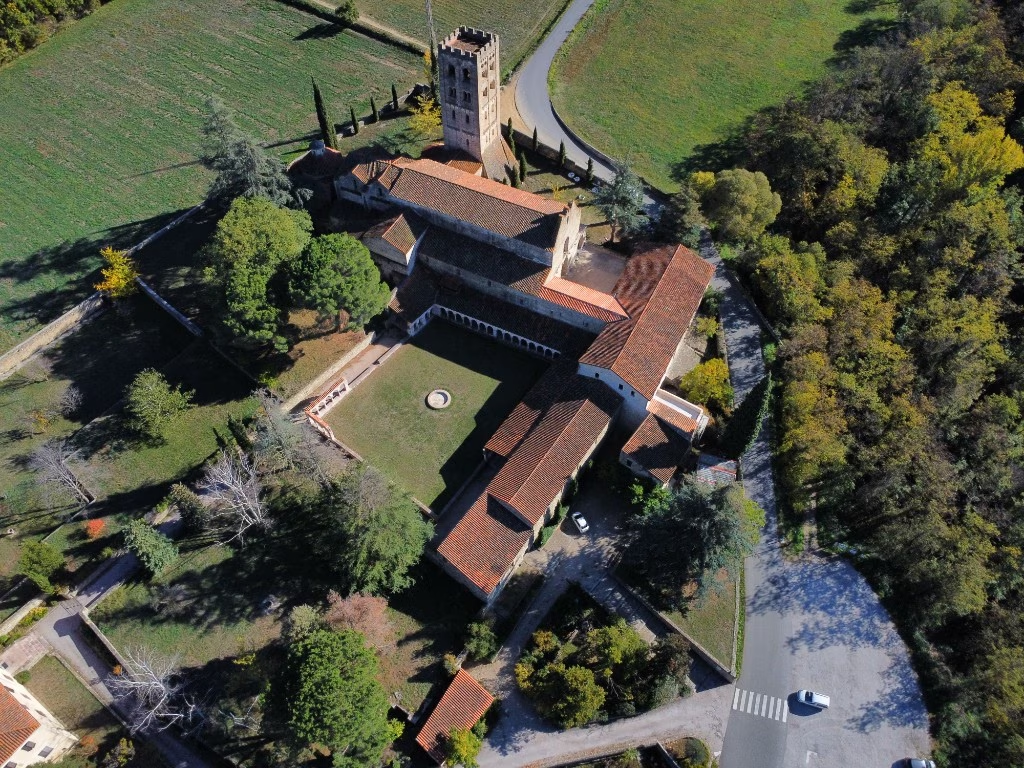
Saint-Michel de Cuxa Abbey - rood screen tribune
Abbaye Saint-Michel de Cuxa / research team France

Projects · patrimoine
Project presented in editorial form. Additional details may be added in the Markdown body.
Document and restore a fragmented medieval sculpted ensemble to support analysis, assembly hypotheses and material reproduction.
Multi-phase 3D digitisation of fragments, automated processing pipeline, illustrative restorations, 3D prints (1:1 and 1:10) and dedicated web platform for placement hypotheses.
A complete flow from 3D data to research tool, linking scientific study, digital anastylosis and heritage valorisation.
Saint-Michel de Cuxa Abbey: digitising, understanding and restoring the fragments of a lost monument.
At Saint-Michel de Cuxa Abbey, Mercurio Imaging supported research and restoration work around the rood screen tribune, a fragmented medieval sculpted ensemble. The mission unfolded in two stages: first on a partially preserved arch, then on a much larger corpus of fragments from the tribune facade.
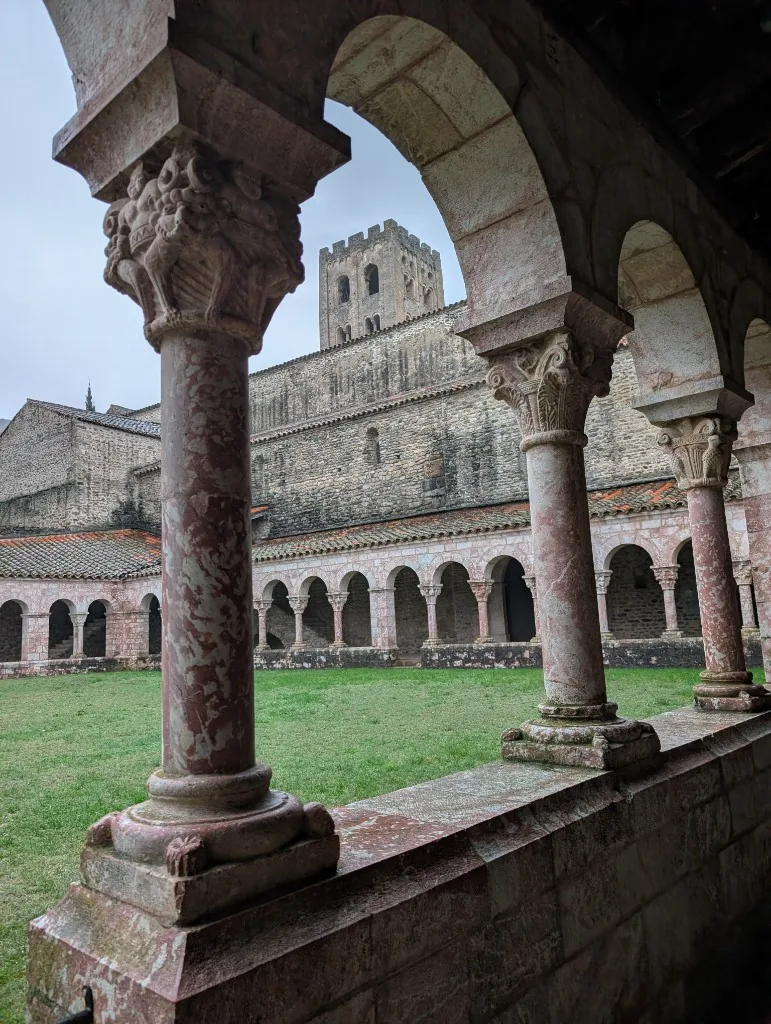
The first phase focused on ten voussoirs from an arch whose original blocks had been recut as paving stones. Each preserved element was digitised in 3D to document its current geometry precisely. From this data, 3D illustration work made it possible to reconstruct missing volumes and propose a coherent restoration of the blocks in their original state.
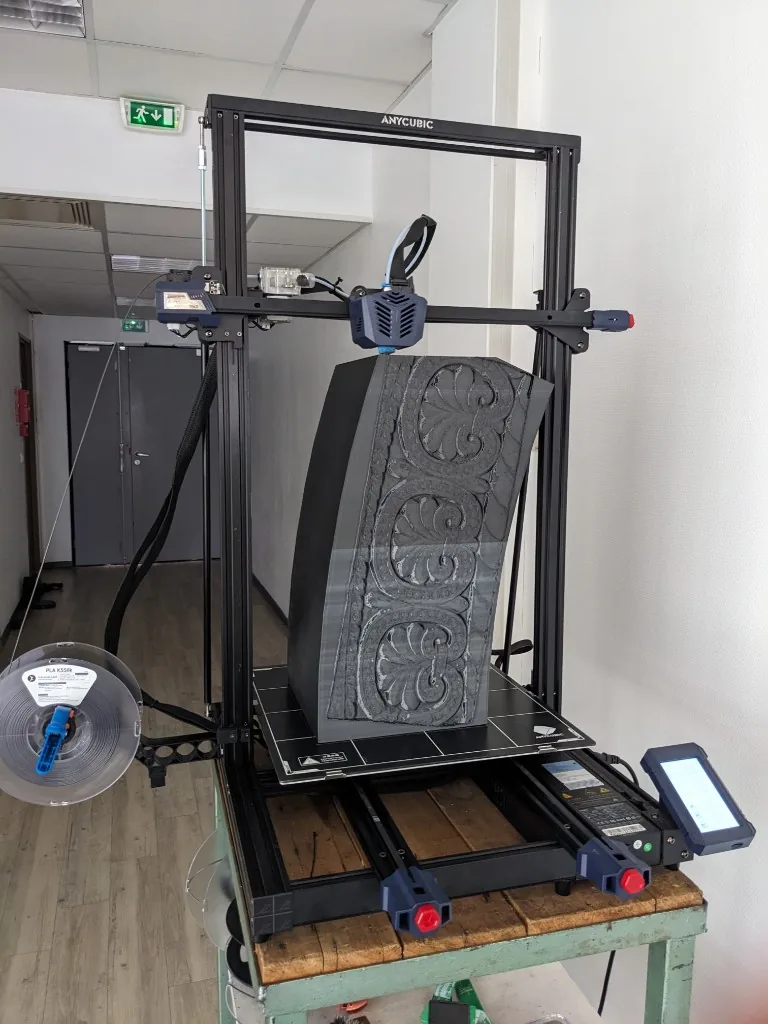
The aim was not merely documentary. The restored volumes were then 3D printed at 1:1 scale to serve as a physical reference for a stone carver. These full-size models thus made it possible to move from digital data to a concrete support, directly usable for reproducing the original arch.
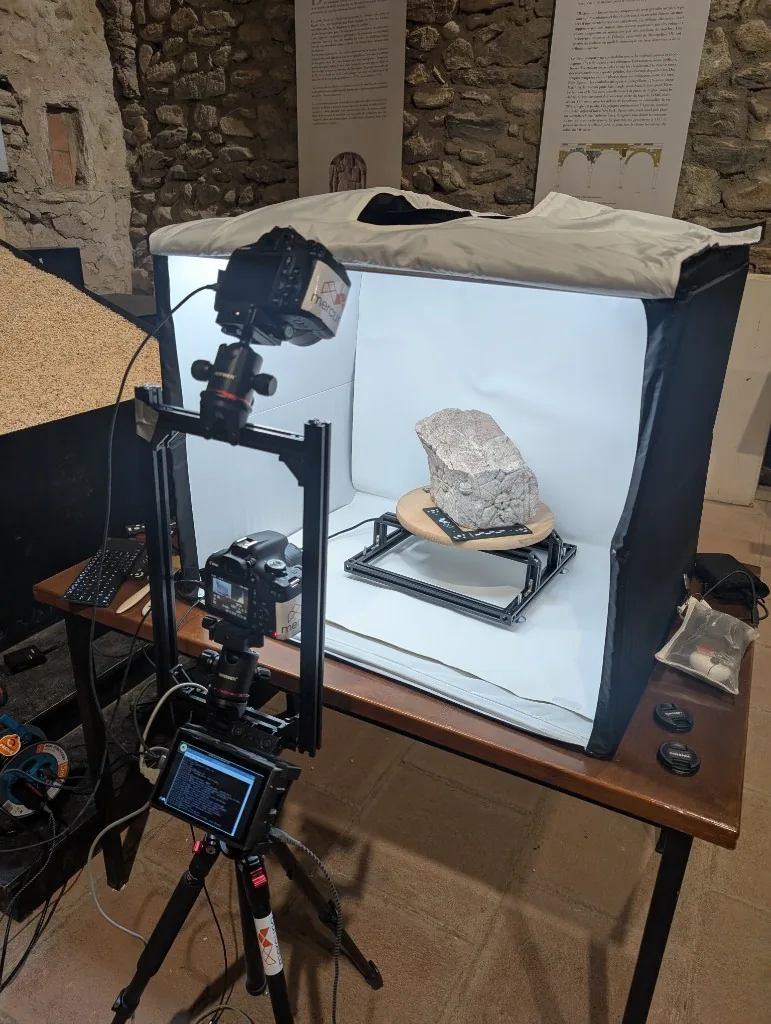
The second phase extended the approach to the entire tribune facade. In two days, 180 additional fragments were digitised by photogrammetry. Faced with this volume of data, Mercurio Imaging set up an automated processing pipeline, making it possible to produce 3D models quickly usable by researchers.
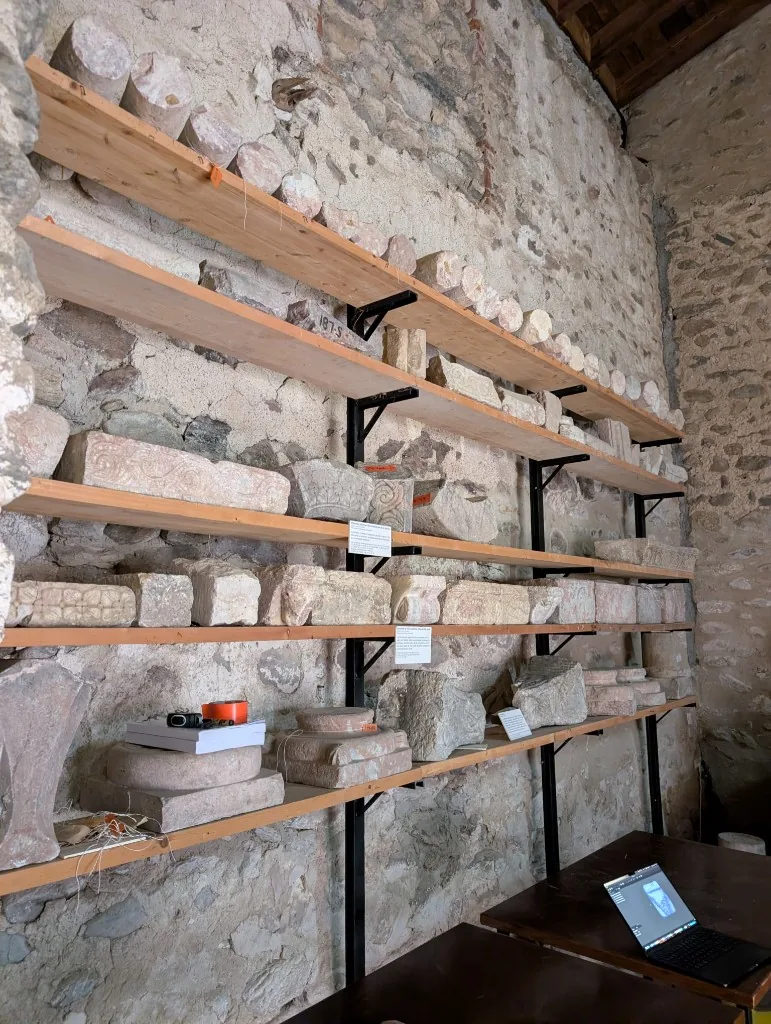
To support the study work, a dedicated web platform was developed. It allows experts to manipulate fragments, formulate placement hypotheses and work on the digital anastylosis of the facade. The blocks were also printed at 1:10 scale to offer a complementary, more manageable material support for testing assembly hypotheses.
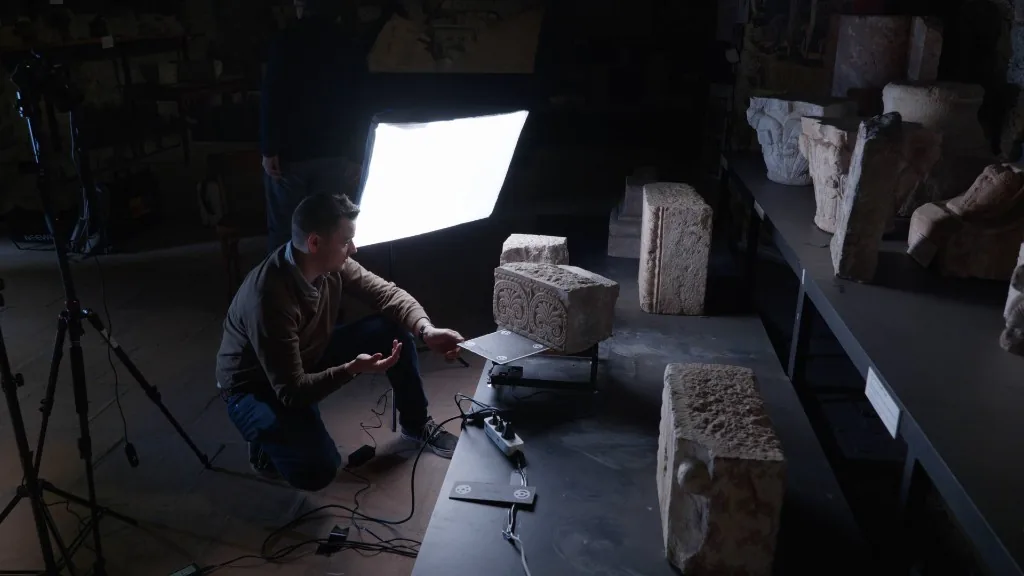
Finally, research hypotheses were translated into 3D illustrations to visualise possible restorations of the rood screen tribune and make a complex heritage object, today dispersed and incomplete, legible.
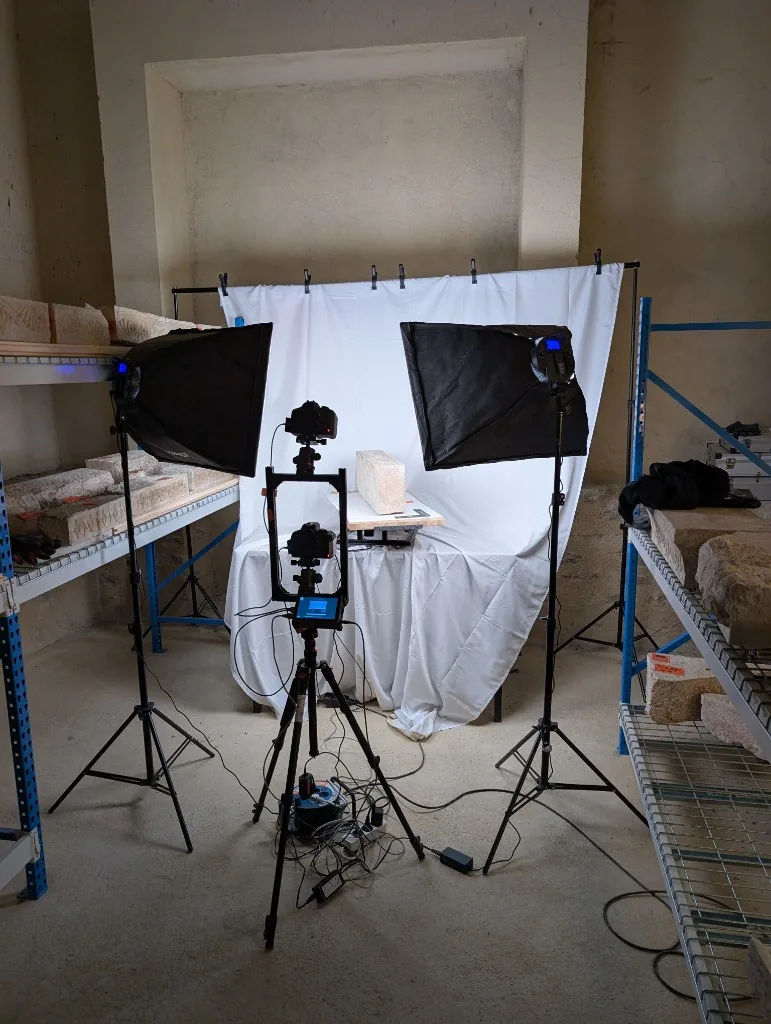
This mission illustrates Mercurio Imaging’s approach: producing precise 3D data, transforming it into analysis tools, then making it usable for research, material restoration and heritage valorisation.