
Context
Project presented in editorial form. Additional details may be added in the Markdown body.
Observation stakes
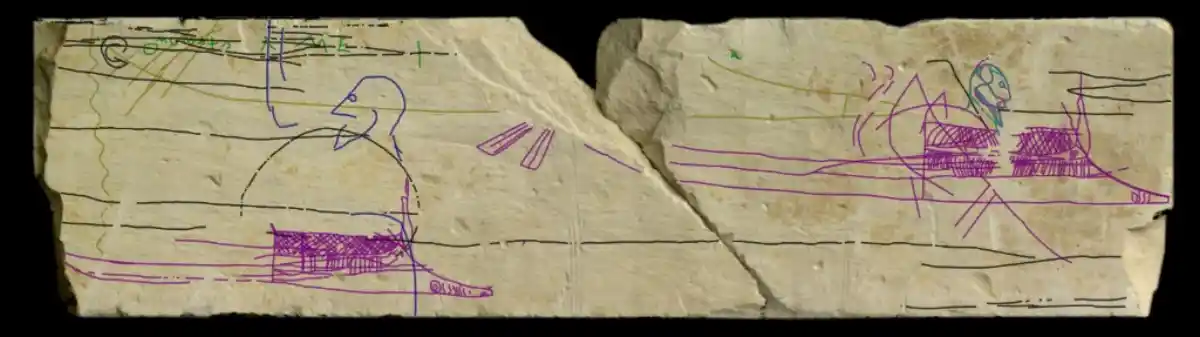
Inscriptions and traces are superimposed and difficult to distinguish on this archaeological block.
Mercurio solution
RTI orthophotogrammetry mosaic acquisition, with annotation pipeline and interactive reading interface.
Technologies
- orthophotogrammetry
- RTI mosaic
- expert annotation
- interactive web publication
Delivered outcome
New archaeological reading and interactive educational support.
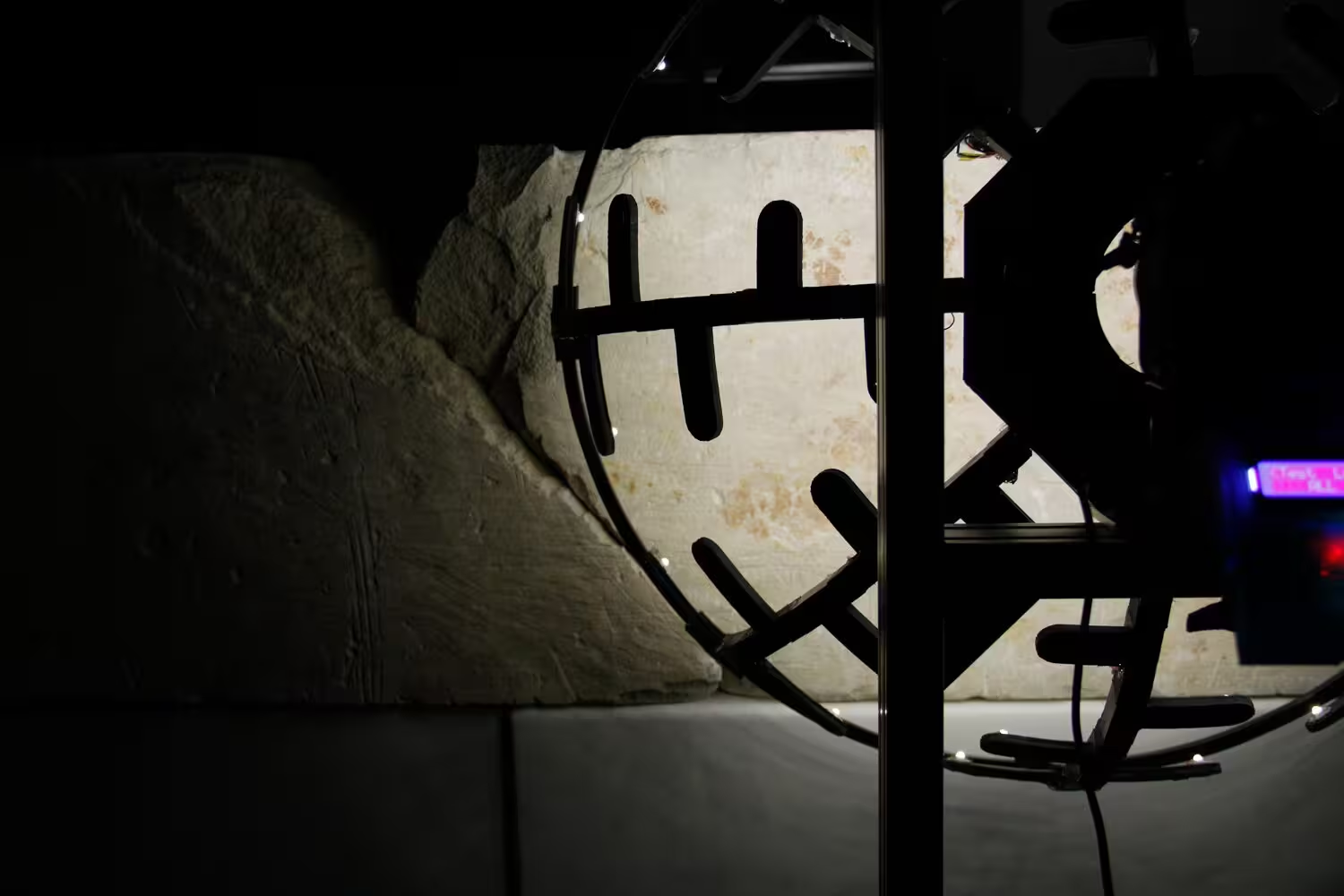
As part of the Ministry of Culture’s “Innovative Digital Service” call for projects, we developed a complete relightable digitisation pipeline around the Alcazar block, held at the Marseille History Museum.
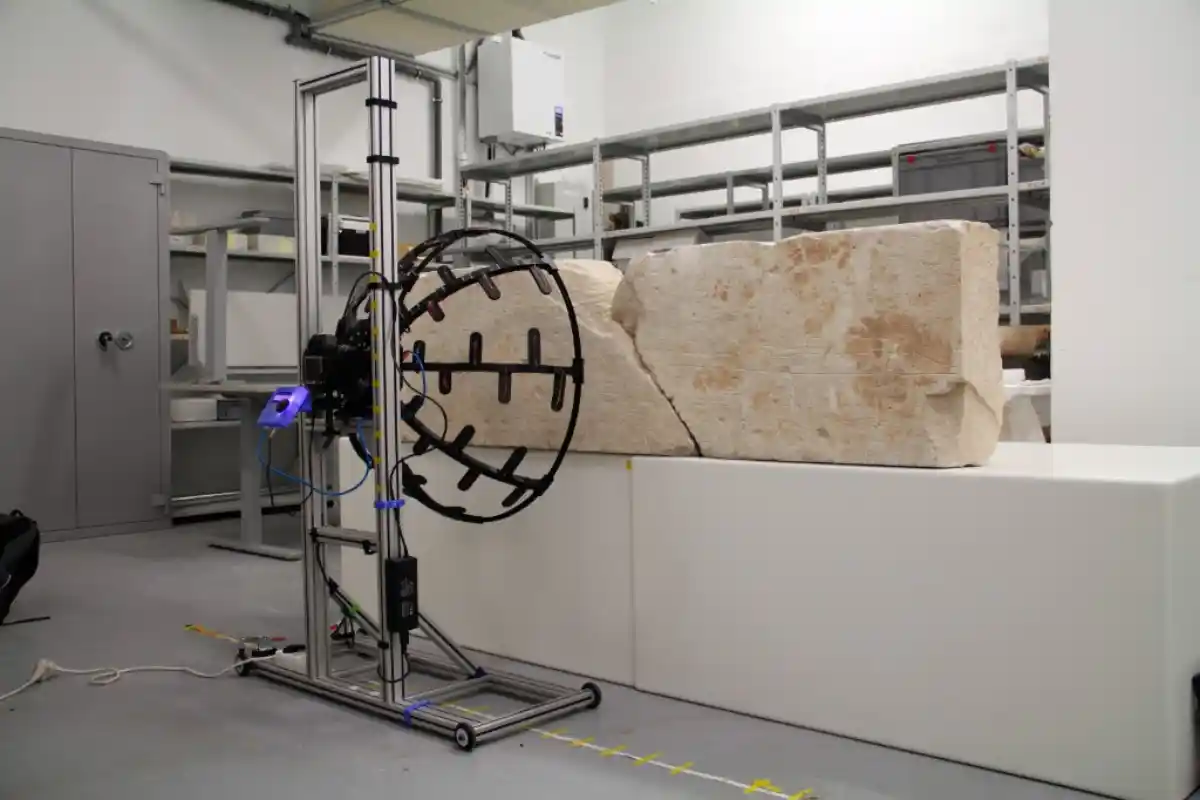
The 2.15 m block, made of two joined fragments, presents an entanglement of archaic graffiti (letters, silhouettes, ships) that is particularly complex to read with the naked eye. The challenge was to produce exhaustive documentation usable for scientific purposes, despite the superposition of incisions.
To meet this scale constraint, we designed a cart system allowing controlled horizontal and vertical movement of the RTI dome to cover the entire surface in mosaic patches.
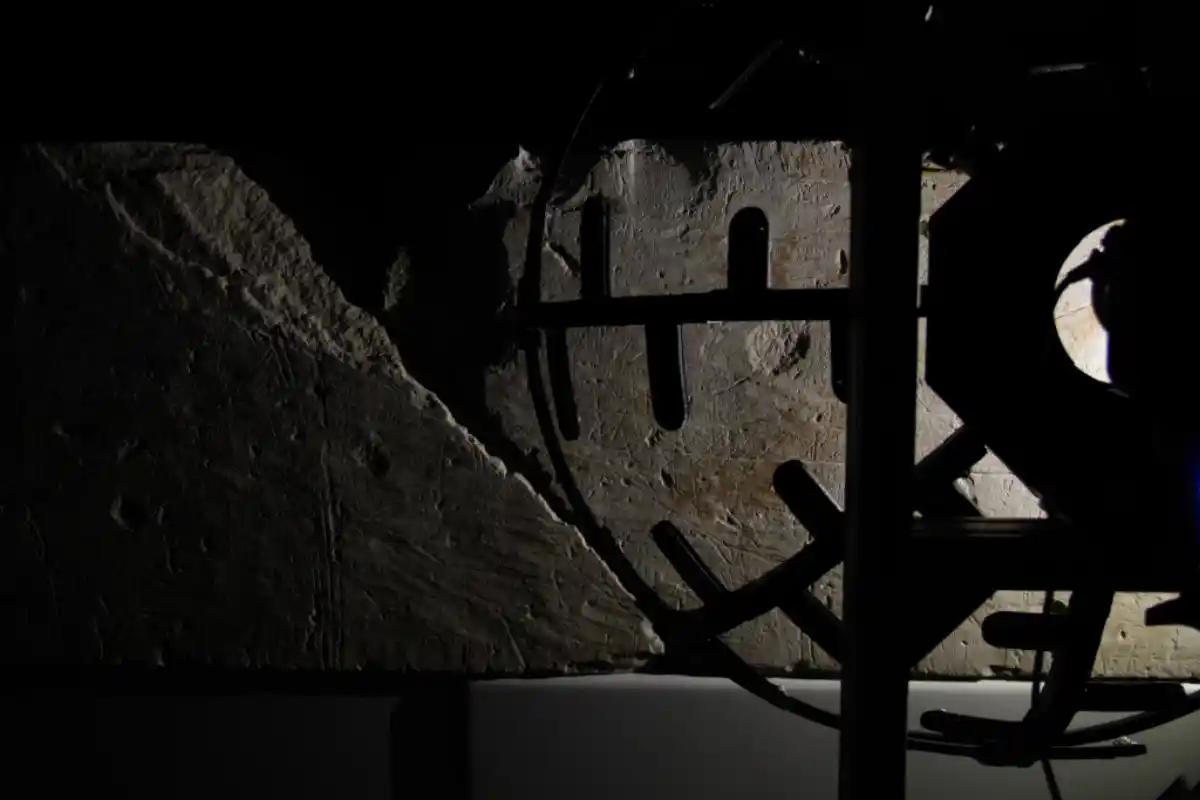
The campaign generated approximately 15,000 photographs, then a 600-megapixel RTI assembly, enabling dynamic relighting and fine reading of micro-relief.
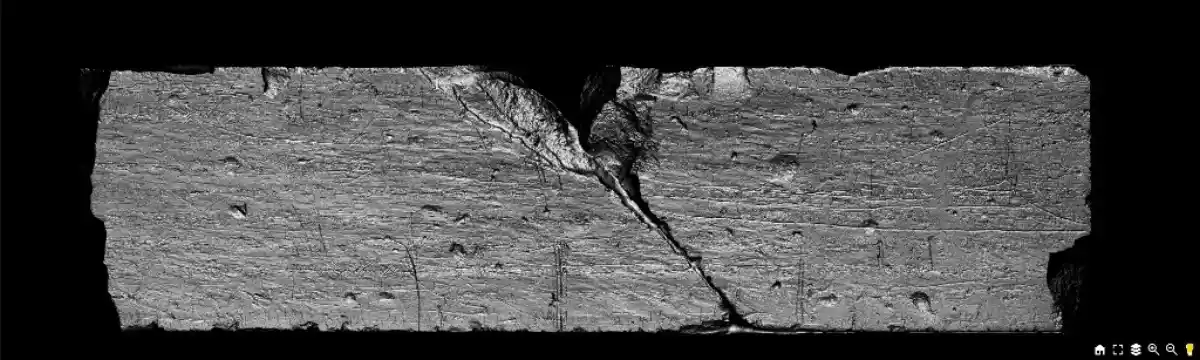
The restitution interface allows navigation from one zone to another, variation of light, and display of expert annotations to guide archaeological interpretation and museum mediation.
This work was awarded the Geste d’Or Hiéritech prize, and the results now form an operational foundation for the study, transmission and public valorisation of this exceptional corpus.