Projects · patrimoine
Restoring colour to the cloister of Notre-Dame-en-Vaux
Musée du Cloître de Notre-Dame-en-Vaux Châlons-en-Champagne

Projects · patrimoine
Project presented in editorial form. Additional details may be added in the Markdown body.
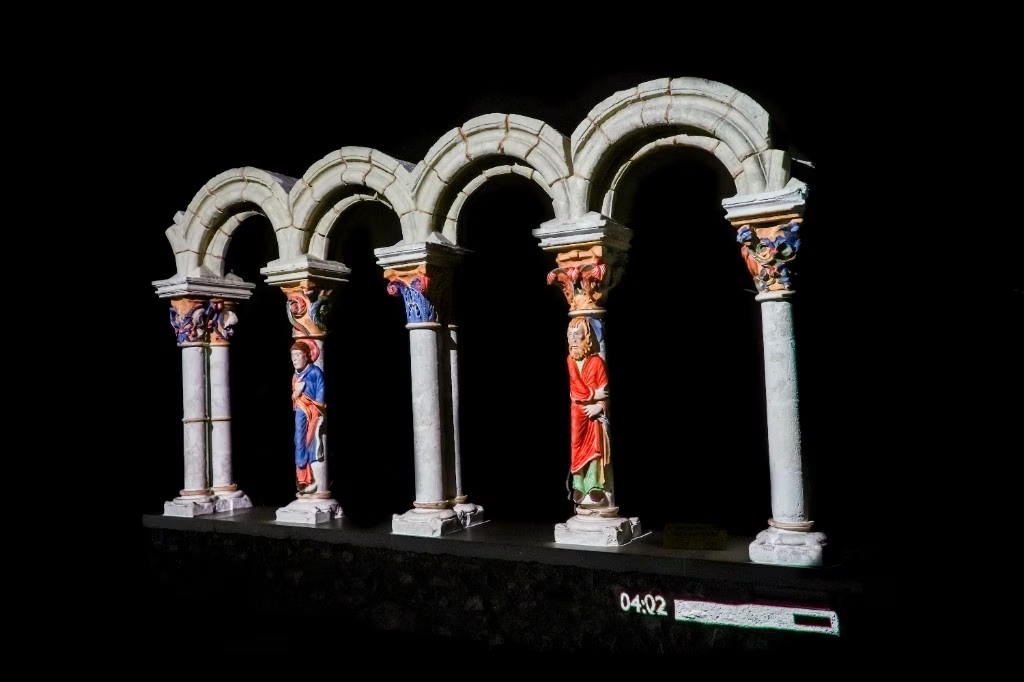
Use projected light to restore the lost coloured appearance of medieval sculptures and make an architecture now perceived mainly as bare stone legible to the public.
High-definition photogrammetry campaign, translation of scientific polychromy hypotheses into graphic and animated content, then development of an architectural projection system on the cloister anastylosis.
A mediation experience where colours, animations and narrative gradually reveal sculpted relief and evoke the appearance of the 12th century.
At the request of the Musée du Cloître de Notre-Dame-en-Vaux in Châlons-en-Champagne, Mercurio Imaging produced a complete projection mapping system designed to restore the lost coloured appearance of the cloister’s medieval sculptures.
The project combines photogrammetry, heritage illustration, animation and architectural projection to offer the public a renewed reading of the preserved remains.
The work began with a high-definition photogrammetry campaign of the cloister’s sculpted elements:
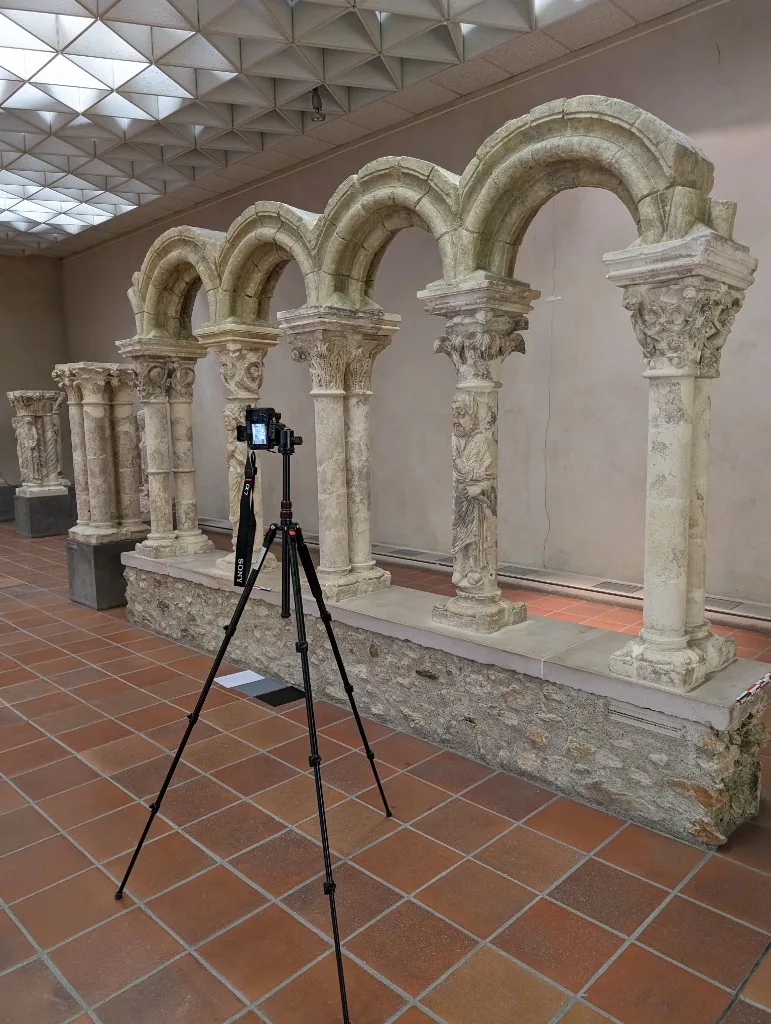
These acquisitions made it possible to produce accurate digital models serving as the basis for graphic work and projected animations.
Based on field observations, preserved pigment traces and references from 12th-century illuminated manuscripts, the museum teams developed several hypotheses for colour restoration.
Mercurio Imaging then transformed these scientific hypotheses into projectable visual content: digital paintings, coloured textures, polychromy simulations, integration of decorative motifs and painted details.
The aim was not to produce a fixed reconstruction, but to make visitors perceive the visual impact colour could have in medieval architecture.
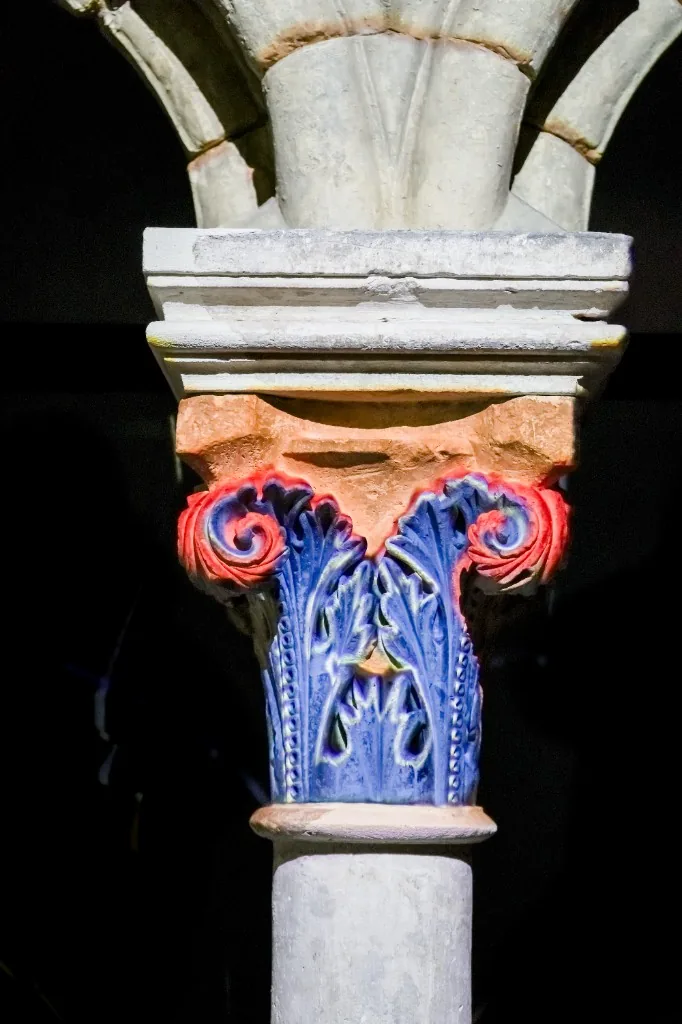
Mercurio Imaging designed and produced all the animations for the system: gradual appearance of colours, luminous animations, narrative transitions, simulations of pigment ageing, evocation of the progressive destruction of sculptures and arches.
The work addressed both the scientific dimension and the rhythm of reading and legibility of the projected sequences.
The content was developed specifically for direct projection onto the anastylosis of the cloister arches. The system combines architectural projection, video animation, dynamic light, colour restoration and staging of sculpted relief.
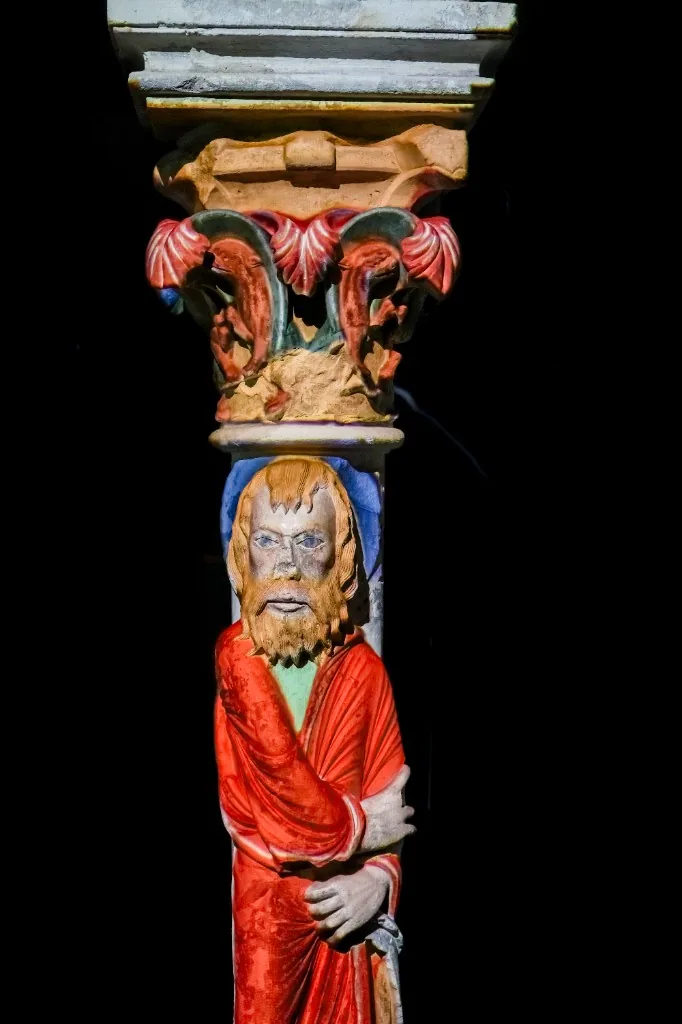
The result makes details that are today barely legible to the naked eye appear progressively and helps the public imagine the cloister’s original appearance in the 12th century.
This project illustrates the approach developed by Mercurio Imaging: using digital tools to produce demanding mediation systems, directly informed by scientific research and observation of the works.